


ZoomInfo is the B2B data incumbent that has dominated enterprise sales intelligence for a decade. Clay is the upstart that lets you pull from 75+ data providers through waterfall enrichment and build custom research workflows. For RevOps, this comparison is about philosophy: do you trust one provider to be your single source of truth, or do you orchestrate across many sources and accept the operational complexity that comes with it?
ZoomInfo vs Clay compares ZoomInfo is the B2B data incumbent that has dominated enterprise sales intelligence for a decade. Clay is the upstart that lets you pull from 75+ data providers through waterfall enrichment and build custom research workflows. For RevOps, this comparison is about philosophy: do you trust one provider to be your single source of truth, or do you orchestrate across many sources and accept the operational complexity that comes with it?
Updated May 2026.
| Factor | ZoomInfo | Clay |
|---|---|---|
| Pricing | $15K-$100K+/year Opaque, aggressive contracts | From $149/mo (credit-based) Credits burn fast at scale |
| Best For | Enterprise data with intent and technographics | Multi-source enrichment and custom data workflows |
| Data Approach | Single proprietary database Simpler to manage | Waterfall across 75+ providers Broader coverage |
| Email Accuracy | ~95% verified Higher single-source | Varies by provider; best-match logic across sources |
| Intent Data | Bidstream + research intent Built-in | Via Bombora or other integrations |
| Learning Curve | Moderate; standard search UI | Steep Requires ops skill to build workflows |
| CRM Integration | Enterprise-grade SF/HS sync Strongest | Custom workflow-based CRM push You build it |
| Contract Flexibility | Annual, auto-renew, hard to exit Lock-in risk | Monthly available Flexible |
| Feature | ZoomInfo | Clay |
|---|---|---|
| Contact Data | 321M+ profiles, proprietary verification Largest single DB | Aggregates from 75+ providers Broadest net |
| Custom Workflows | Predefined search and export | Spreadsheet-style with formulas and AI agents Highly flexible |
| AI Research | Not available | AI agent scrapes websites and enriches from unstructured sources Unique |
| Technographics | Detailed tech stack tracking Complete | Via BuiltWith, Wappalyzer, or other integrations |
| Org Charts | Available on enterprise plans Included | Not available natively |
| Phone Data | Verified direct dials and mobiles Superior | Aggregated from multiple providers, quality varies |
| Data Freshness | Continuous updates on proprietary data | Real-time enrichment on demand Always current |
Many teams use ZoomInfo as one of the data providers within Clay waterfall enrichment. This is expensive but produces the highest data quality: ZoomInfo provides a strong baseline, and Clay fills gaps from other providers. If neither fits, Apollo at $49/user/mo offers a solid mid-market database, or build a manual enrichment stack with Lusha, Clearbit, and Apollo as individual sources.
| Use Case | Winner | Why |
|---|---|---|
| Enterprise data simplicity | ZoomInfo | Single source, native CRM sync, no workflow building required |
| Data coverage breadth | Clay | Waterfall across 75+ providers beats any single source |
| Intent data and technographics | ZoomInfo | Bundled intent and tech stack data out of the box |
| Custom enrichment logic | Clay | Workflow builder with conditional logic and AI research agents |
| Phone data quality | ZoomInfo | Verified direct dials with higher accuracy rate |
| Contract flexibility | Clay | Monthly plans vs. rigid annual lock-in |
ZoomInfo is the established enterprise data provider that works out of the box for teams that value simplicity and single-source reliability. Clay is the data orchestration platform for ops-savvy teams that want maximum coverage and workflow flexibility. The decision comes down to your team: if you have someone who can build and maintain Clay workflows, the multi-source data quality advantage is real and measurable. If you need reps self-serving data with minimal ops involvement, ZoomInfo is the more practical choice. Just go in with eyes open on the contract terms.
ZoomInfo gives you the largest proprietary B2B database, verified contact data, intent signals, and enterprise-grade CRM sync in one package. Clay gives you broader data coverage through waterfall enrichment, AI-powered research agents, and workflow flexibility that ZoomInfo cannot match. ZoomInfo is easier to operationalize. Clay produces better data if you have the ops skill to build and maintain the workflows. Budget $15K-50K+ for ZoomInfo or $5K-25K+ for Clay depending on credit consumption.
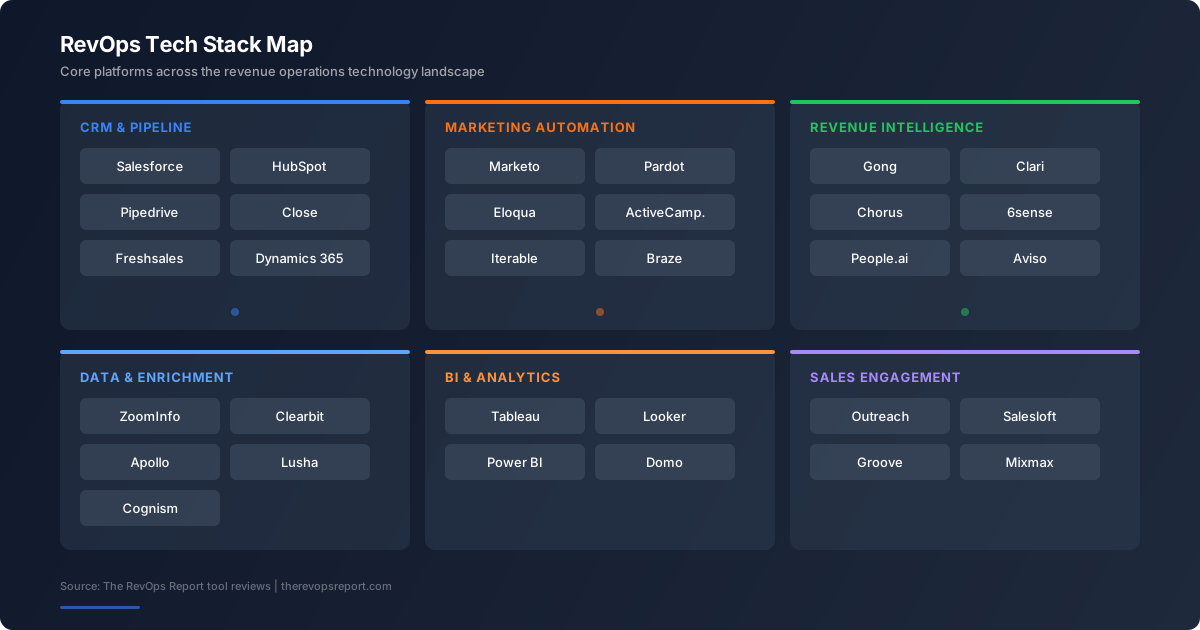
ZoomInfo starts at $15K-$100K+/year Opaque, aggressive contracts, while Clay starts at From $149/mo (credit-based) Credits burn fast at scale. The right choice depends on your team size, required features, and budget. Check each vendor's current pricing page for the latest plans.
Yes, many RevOps teams run ZoomInfo and Clay in parallel. The key is defining clear ownership for each tool so data stays clean. Use native integrations or middleware like Workato or Tray.io to sync records between them. Before committing to both, verify the overlap doesn't create duplicate workflows or conflicting data sources.
ZoomInfo is the B2B data incumbent that has dominated enterprise sales intelligence for a decade. Clay is the upstart that lets you pull from 75+ data providers through waterfall enrichment and build custom research workflows. For RevOps, this comparison is about philosophy: do you trust one provider to be your single source of truth, or do you orchestrate across many sources and accept the operational complexity that comes with it?
Switching from ZoomInfo to Clay involves migration costs, retraining, and potential downtime. Before committing, audit your current usage: if you're using less than 40% of ZoomInfo's features, a switch may simplify your stack. If you're deeply integrated, the switching cost may outweigh the benefits. Run a 30-day pilot with Clay alongside your current setup before making a full commitment.
Tool reviews, salary benchmarks, and stack recommendations for RevOps leaders.
Subscribe Free