🎯 Revenue Intelligence Tools for RevOps
Conversation intelligence, forecasting, and deal analytics. The tools RevOps uses to give leadership accurate pipeline and forecast visibility.
Key Takeaways
- Decide whether your primary need is call coaching or board-ready forecasting, because vendors lead with different strengths.
- Favor a forecast methodology you can explain to your CFO over a black-box number you cannot defend.
- Intelligence that writes back into the CRM gets used; insight stranded in a separate dashboard gets ignored.
Reviews
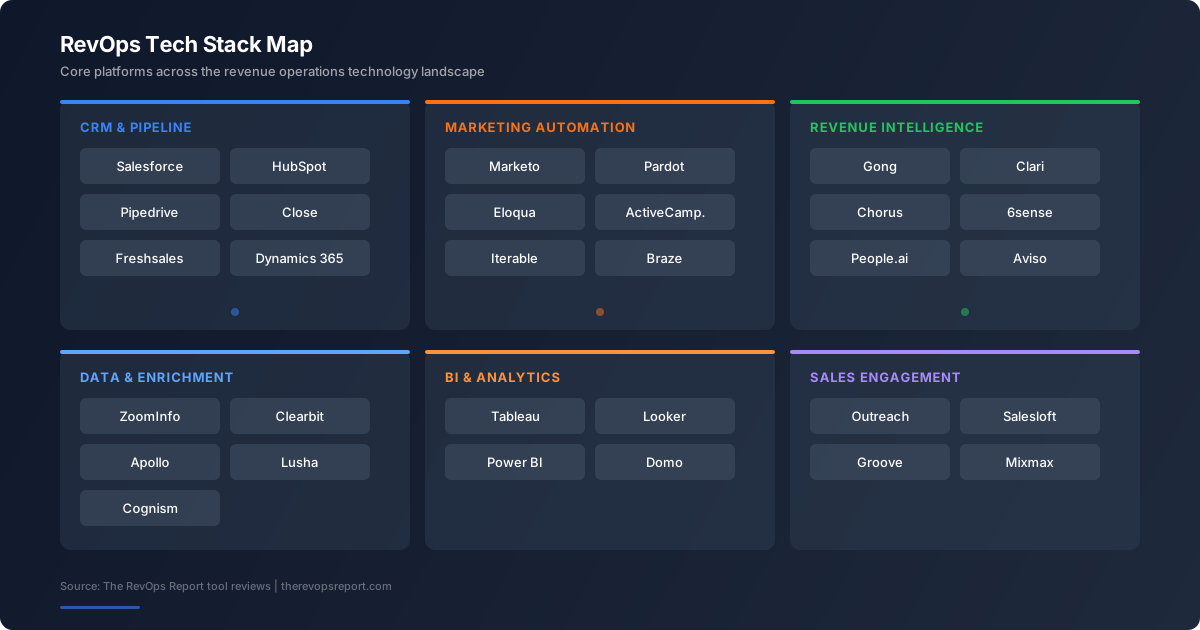

Market-leading conversation intelligence platform. RevOps teams use Gong for call analytics, deal intelligence, and coac...

Revenue platform for forecasting and pipeline visibility. Clari is the tool RevOps teams deploy to give CROs and board-l...

Conversation intelligence platform acquired by ZoomInfo. For RevOps teams already running ZoomInfo, Chorus adds call rec...

AI sales assistant for CRM automation and deal execution. For RevOps teams fighting CRM data quality issues, Sybill auto...
Comparisons
Revenue intelligence tools capture and analyze sales conversations and pipeline activity to give leadership accurate forecasting and deal insight. They typically combine conversation intelligence (recording and analyzing calls) with forecasting and deal-health analytics.
Who These Tools Are For
- RevOps and sales leaders who need a forecast grounded in activity data rather than rep optimism.
- Enablement teams that coach reps using real call recordings and talk-track analysis.
- Deal teams that want early warning on stalled or at-risk opportunities.
How to Evaluate Revenue Intelligence Tools
Conversation intelligence vs. forecasting depth
Some platforms are strongest at recording and analyzing calls; others lead with forecasting and pipeline analytics. Decide which problem is primary. If you mainly need coaching, weight conversation intelligence; if you need board-ready forecasts, weight the analytics engine.
Forecast methodology
Ask how the tool builds its forecast: is it driven by activity and engagement signals, by rep-entered commit data, or a blend? A model you cannot explain to your CFO is a model you cannot defend, so prioritize transparency over a black-box number.
Capture coverage
The insight is only as good as the calls captured. Confirm the platform reliably records across your conferencing and dialer stack, and check how it handles in-person or partner-led deals where no call is recorded.
CRM write-back and adoption
Insights that live only in a separate dashboard get ignored. Confirm the platform writes risk flags and engagement data back into the CRM and opportunity views reps already use, so the intelligence reaches the workflow.
The Revenue Intelligence Landscape
This category covers conversation intelligence and forecasting platforms. The reviews below profile the leading vendors, and the comparisons (including conversation-intelligence head-to-heads and intelligence-versus-forecasting matchups) help you decide whether your primary need is coaching, deal insight, or board-ready forecasting.
Jump to a review: Gong · Clari · Chorus.ai · Sybill.
Coaching tool or forecast engine
Revenue intelligence covers two jobs that vendors weight differently. Conversation intelligence records and analyzes calls, which is mainly a coaching and deal-signal tool. Forecasting and pipeline analytics project outcomes for leadership. Some platforms lead with one and treat the other as a checkbox. Decide which gap is bigger for you: if reps need coaching and managers need talk-track visibility, weight conversation intelligence; if the board needs a defensible number, weight the forecasting engine.
Trusting the forecast
An activity-driven forecast can beat rep-entered commits, but only if you understand how it is built. Ask whether the projection comes from engagement signals, historical conversion patterns, rep commit data, or a blend, and whether you can explain it to your CFO. A black-box number that no one can defend is worse than a simple, transparent model, because the first time it is wrong, leadership stops trusting the whole system.
Coverage sets the ceiling
These platforms learn from what they capture. If most of your selling happens on recorded calls, coverage is high and the insight is rich. If deals close in person, through partners, or over channels the tool does not record, the intelligence is thin and the forecast leans on less data. Match the platform to your actual sales motion rather than assuming full-funnel visibility, and account for the deals it cannot see.
Adoption decides the payoff
Even an accurate forecast and rich call analysis are worthless if the team ignores them. Insight that lives only in a separate dashboard gets skipped; insight pushed into the opportunity views reps and managers already use gets acted on. When evaluating, weight how the platform surfaces risk flags and engagement data inside the existing CRM workflow, and how much behavior change it demands. The best-fit tool meets the team where it already works rather than asking everyone to adopt a new screen they will quietly abandon.
Common Mistakes RevOps Teams Make
- Buying a conversation-intelligence tool when the real need was a defensible, board-ready forecast (or vice versa).
- Accepting a black-box forecast no one can explain, which collapses leadership trust the first time it misses.
- Assuming full visibility when much of the sales motion happens off recorded calls and is invisible to the tool.
The Bottom Line
Choose a revenue intelligence platform by the gap you most need to close, coaching or forecasting, and insist on a forecast model you can explain and capture coverage that matches your sales motion. The reviews and comparisons above contrast conversation-intelligence specialists with forecasting-led platforms so you can buy the strength you need rather than a broad suite that does neither job especially well.
Frequently Asked Questions
What is revenue intelligence software?
It captures sales conversations and pipeline activity and analyzes them to improve forecasting and deal insight. Most platforms combine conversation intelligence (recording and analyzing calls) with forecasting and deal-health analytics so leaders can see risk early and forecast from data.
What is the difference between conversation intelligence and forecasting tools?
Conversation intelligence records and analyzes calls for coaching and deal signals. Forecasting tools project pipeline outcomes from activity and commit data. Some platforms emphasize one; many do both, so pick based on whether coaching or forecasting is your bigger gap.
How accurate are revenue intelligence forecasts?
Accuracy depends on the methodology and data coverage. Activity-driven forecasts can outperform rep-entered commits, but only if the platform captures most of your deal activity. Prefer a transparent model you can explain over an unexplained number.
Do these tools work for in-person or partner-led deals?
Coverage is the limiter. Platforms shine when most selling happens on recorded calls. For in-person, partner-led, or low-touch deals where little is captured, the intelligence is thinner, so weight that against your actual sales motion.
Where does revenue intelligence fit in the RevOps stack?
It sits on top of the CRM and conferencing tools, reading activity and writing insight back. Its value depends on adoption, so the best-fit platform pushes risk flags and engagement data into the opportunity views reps already use.
Sources & Further Reading
Related: Best Revenue Intelligence tools, ranked.