🤖 Marketing Automation Tools for RevOps
AI SDRs, outbound automation, and marketing platforms. The automation layer RevOps evaluates to scale pipeline generation without scaling headcount.
Key Takeaways
- Rules-based automation and autonomous AI agents are different bets; AI SDRs need supervised pilots, not blind rollout.
- Automation only converts if scored leads route to a rep fast, so the routing handoff deserves as much scrutiny as the engine.
- Pair any platform's self-reported influence with an independent attribution view to avoid inflated credit.
Reviews

AI SDR platform backed by a16z and Benchmark. RevOps teams evaluating AI SDRs need to weigh 11x's high-volume automation...

AI BDR platform with 'Ava' assistant, Y Combinator backed. Artisan promises all-in-one outbound automation with a 300M+ ...

AI SDR with quarterly contracts and transparent pricing. For RevOps teams testing AI SDR tools, AiSDR is the lowest-risk...

AI-powered sales engagement with parallel dialer and AI agents. For RevOps teams exploring the AI + human SDR hybrid mod...

Adobe's enterprise marketing automation platform. RevOps teams manage Marketo's lead scoring, nurturing programs, and th...

Conversational marketing platform built natively on Salesforce. RevOps teams use Qualified to identify target accounts v...

The original conversational marketing platform, now owned by Salesloft/Clari. Drift pioneered chatbot-to-meeting convers...

Salesforce-native marketing automation (officially rebranded to Marketing Cloud Account Engagement). For RevOps teams on...

Affordable marketing automation with a surprisingly capable automation builder and built-in CRM. For SMB RevOps teams th...
Comparisons
Alternatives Guides
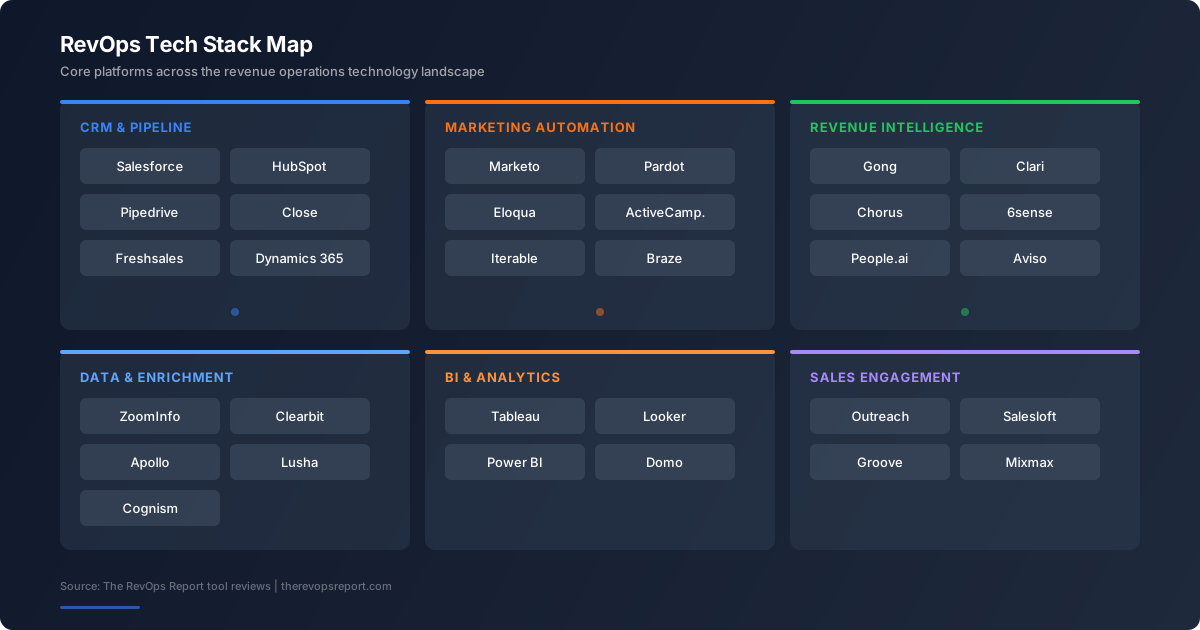
Marketing automation and AI-outbound tools cover the layer that scales pipeline generation without scaling headcount: email nurture and campaign engines, AI SDRs, conversational marketing, and chat. RevOps evaluates these to drive and route demand programmatically.
Who These Tools Are For
- Demand gen and RevOps teams running nurture programs, lead scoring, and campaign attribution.
- Leaders piloting AI SDRs or autonomous outbound agents to expand top-of-funnel coverage.
- Teams using conversational marketing and chat to convert website traffic into routed meetings.
How to Evaluate Marketing Automation Tools
Automation vs. autonomy
There is a real difference between rules-based marketing automation (you define the flows) and AI agents that draft and decide. AI SDRs can expand coverage but vary widely in quality and can damage your reputation if poorly supervised. Treat early AI-outbound deployments as supervised pilots with human review.
Lead scoring and routing tie-in
Automation only pays off if scored leads route to the right rep fast. Confirm the platform integrates with your routing rules and CRM so a hot inbound does not sit in a queue. The handoff is where most automation programs leak revenue.
Deliverability and brand safety
AI-generated outbound at volume raises both deliverability risk and brand risk. Insist on human-in-the-loop controls, sending limits, and the ability to review messaging before it ships, especially for autonomous agents.
Attribution honesty
Marketing automation platforms report their own influence generously. Pair the platform's reporting with an independent attribution view so you are measuring real pipeline impact, not self-reported credit.
The Marketing Automation Landscape
This category mixes established marketing automation platforms with a fast-moving wave of AI SDRs and conversational tools. The reviews below cover both, and the comparisons help you weigh proven nurture engines against newer autonomous-outbound entrants whose quality still varies.
Jump to a review: 11x · Artisan · AiSDR · Regie.ai · Marketo · Qualified.
Automation versus autonomy
It is worth being precise about what you are buying. Classic marketing automation runs flows you design: a lead does this, the system does that. The newer wave of AI SDRs and outbound agents draft messaging and decide who to contact on their own. The first is predictable and easy to govern; the second can expand coverage fast but varies widely in quality and can damage your brand and deliverability if left unsupervised. Treat AI-outbound as a supervised pilot, not a set-and-forget rollout.
The handoff is where revenue leaks
Automation that generates and scores demand only pays off if hot leads reach a rep quickly. The seam between the automation platform and your routing rules is where many programs lose deals: a qualified inbound sits in a queue, cools off, and never converts. RevOps should instrument that handoff carefully, measuring how long a qualified lead waits before a rep makes first contact, because the engine upstream is wasted if the routing downstream is slow.
Measuring impact honestly
Marketing automation platforms are generous when reporting their own influence, crediting every touch they can see. That self-reported view tends to overstate impact. Pair the platform's numbers with an independent attribution model that ties touches to closed CRM revenue, so budget decisions rest on genuine pipeline contribution rather than the platform marking its own homework.
Common Mistakes RevOps Teams Make
- Deploying an AI SDR unsupervised and discovering brand and deliverability damage only after it scales.
- Optimizing the automation engine while ignoring the slow routing handoff where qualified leads go cold.
- Trusting the platform's self-reported influence instead of tying touches to closed revenue independently.
The Bottom Line
Whether you are running classic nurture flows or piloting an AI SDR, the same rule holds: instrument the handoff to sales, supervise autonomous outbound, and measure impact against closed revenue rather than self-reported influence. The reviews above cover proven automation platforms alongside newer autonomous entrants, so you can weigh predictable, governable automation against faster but more variable AI-driven coverage.
Frequently Asked Questions
What is the difference between marketing automation and an AI SDR?
Marketing automation runs rules-based flows you design (nurture emails, scoring, campaign triggers). An AI SDR is an autonomous agent that drafts messaging and decides who to contact. Automation is predictable; AI SDRs expand coverage but require human supervision because quality and brand safety still vary.
Are AI SDR tools reliable enough to deploy?
Quality varies widely across vendors, so deploy them as supervised pilots with human review of messaging and tight sending limits. Measure whether the generated outbound produces qualified pipeline, not just volume, before expanding the program.
How does marketing automation connect to lead routing?
Scored or qualified leads from the automation platform should pass into your routing rules and CRM so they reach the right rep quickly. The handoff between automation and routing is where many programs lose hot leads, so test it carefully.
Do AI outbound tools hurt email deliverability?
They can, because volume and templated patterns raise spam risk. Use sending limits, warmup, human review, and ideally a separate sending domain so an aggressive AI campaign does not damage your primary email reputation.
How do I measure marketing automation ROI honestly?
Do not rely solely on the platform's self-reported influence, which tends to over-credit its own touches. Combine its reporting with an independent attribution model so you measure genuine pipeline and revenue impact.